
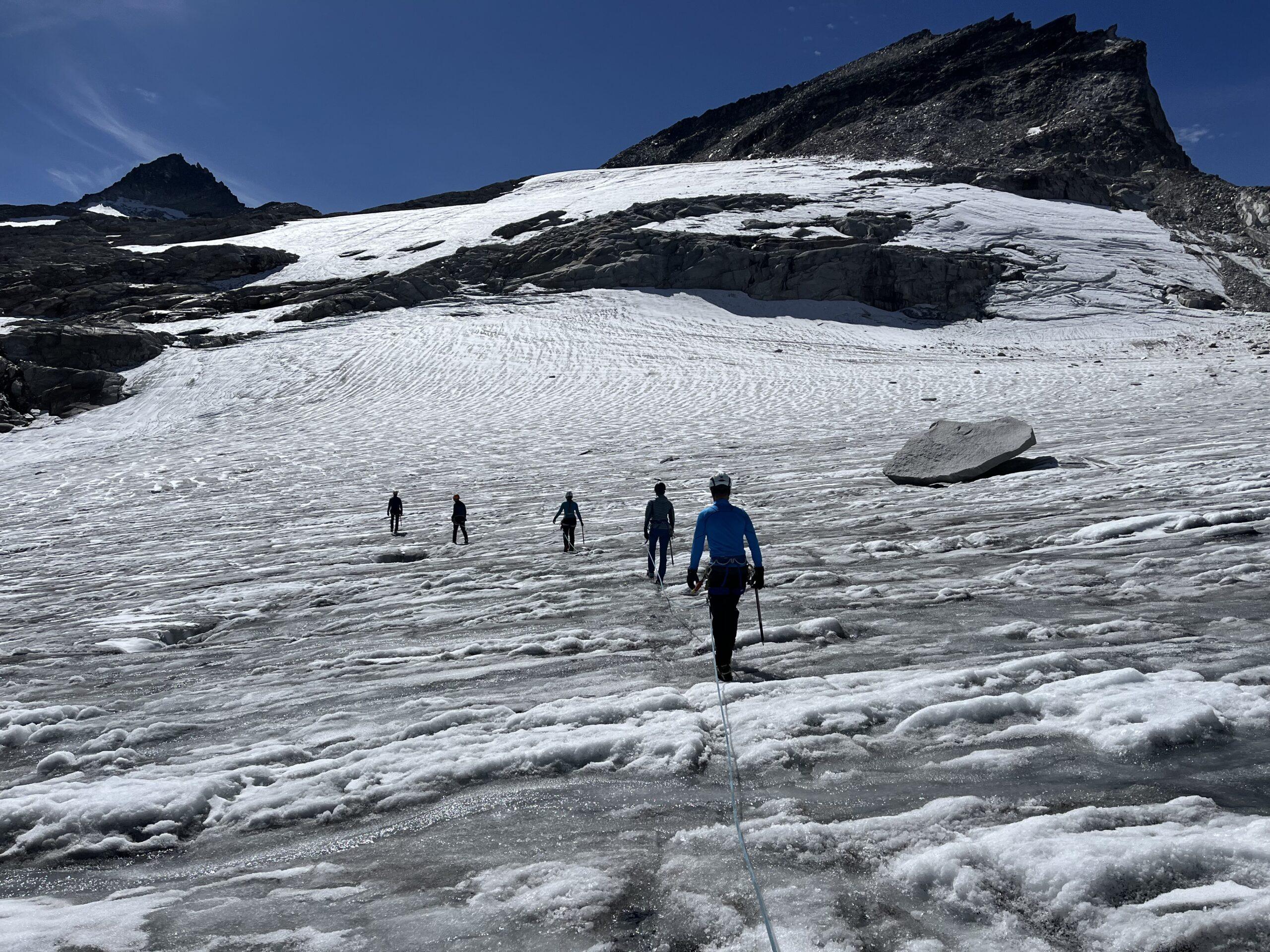
Walking is one of the most fundamental movements we develop. We were usually never taught how to walk, it is something nearly everyone figures out on their own — albeit with role models. Yet the way we learn it can be quite different for most of us.
It is second nature to us for most of our lives, yet due to different disabilities, injuries or even illnesses, some may never have been able to or at least at some point stop being able to walk. In that sense the ability to walk is of special importance to us and is not something we should ever take for granted — although few things should, yet something we should cherish.
There are things like the air that we can take for granted, as without it we wouldn’t be able not to take it for granted 🤣.
When we walk, we usually walk, yet we rarely think about the way we walk. Yet when we learn a new type of sports or a new instrument, we think about the way we use it, wanting to learn it correctly. Yet barely anyone wonders: Am I walking correctly 😅.
We just move on our feet, not thinking about the alignment of our legs, hips, knees, feet, even our core, head and arms — the only time we usually do, is when we experience pain 🥲.
In reality, by taking walking for granted we risk more pain and more injuries. When we step on the ground, how often do we think about how soft or hard it is, about the speed with which one moves the foot back to it, about its unevenness, about the unexpected — like a loose cobble or an overlooked drop —, about all the things we may have stepped on or simply about the way the ground doesn’t just vanish 🤣.
In the following, I want to first explore the mechanics of walking, how different terrain affects walking and in the end what it can teach us about ourselves. Don’t worry I try my best to make it somewhat entertaining 😉.
What makes walking possible
Walking, in its simplest form, requires two legs — one on the ground, the other lifting, moving, landing.
But even this most basic definition hides how much more is involved.
We can only walk because we have something to push against: the ground beneath us and the friction that keeps us from sliding away.
Balance is just as essential.
If we simply swung our legs forward while keeping our upper body fixed in place, we would immediately tip over (I am an expert on this 😅) — depending, of course, on how much friction keeps us connected to the ground beneath us.
The way we walk is also bounded by our physical dimensions: our height, leg length, shoulder width, arm reach, foot size, and the many other length scales like shank length. By the strength and compactness of our muscles — especially in the legs, glutes, core, feet, and hips — but also by the quiet support of countless smaller muscles we rarely think about.
Then there are the joints that make movement possible in the first place.
Bones give us structure and let us stand upright rather than move like snails 😉.
Ligaments hold the bones in place, especially the parts that make up a joint — that’s why we don’t fall apart while moving.
Tendons connect muscles to bones, transmitting force.
Fasciae weave everything together, separating and linking muscles at the same time.
Our muscles are controlled by nerves, and those nerves are controlled by the brain.
Movement is never just “muscular”. It depends on our digestive and circulatory systems for energy, on our eyes for spatial orientation, on the endolymph fluid in our inner ears for balance, and on cutaneous receptors in our skin for our sense of touch, and on proprioceptors in our muscles, ligaments, and tendons that tell us where our body is and how it moves.
In other words, we move through several layers of control.
The brain sends signals through nerves to activate muscles; the muscles pull on bones through tendons; the bones rotate around joints held together by ligaments; and our senses feed information back so that the brain can plan the next step before the current one has fully finished.
The flexibility and resilience of our ligaments and tendons limits how far and how freely we can move.
The strength of our bones limits how much stress we can absorb.
The coordination of dozens of muscles at once is an incredibly complex process — something we spent months or even years learning as children. Yet as adults, we get frustrated when we don’t master a new movement instantly 🤣, forgetting that walking itself once required immense effort.
The strength, imbalances, and shapes of our muscles, tendons, ligaments, bones, and joints all influence how we walk. Walking is not fixed, it evolves.
It changes as we strengthen certain muscles, loosen others, improve flexibility, or retrain coordination in the brain. And it changes automatically when we lose strength, become less flexible, or experience injury or illness.
Walking is not a static ability.
It is a moving equilibrium — one that adapts with every change in our body and one that can, in turn, propel changes within us.
The ground beneath us
As already mentioned the properties of the ground you place your foot on are of significant importance when walking. For simplicity, let’s distinguish three things: material, geometry, and attributes of the ground.
Since I am not Jesus, I won’t discuss walking on water 🤣.
Material:
- hard — ground that does not deform under your weight (unless unstable) — like concrete
- soft — ground that deforms when you step on it — like mud
- elastic — ground that stores and returns some energy with each step — like a trampoline surface
- granular — ground made of many small particles that can shift as you walk — like gravel
Geometry:
- even — your foot makes full contact with the surface
- uneven — only parts of your foot make contact
- flat — balanced footing in all directions
- steep — the slope changes balance as you move uphill or downhill
- side-sloped — the ground tilts sideways, requiring constant lateral adjustment
- stepped — movement happens in discrete steps (stairs, terraces, ledges)
- blocky — large blocks or stones require minimum step lengths and precise placement
Attributes:
- dry – dry ground is less slippy and/or more solid than wet ground
- wet – wet ground can be more sticky, slippy and/or less solid than wet ground
- flooded – flooded ground meaning ground that is underwater but where one still can walk on — with depths up to someones neck
- sticky – sticky ground like mud is more difficult to move in, since one has to overcome the additonal adhesion force in order to walk
- low friction – low fricton ground like ice can be quite slippy and it becomes difficult to balance on it and/or taking larger steps
- high friction – allows easier balance and movement on steeper terrain and/or larger steps
- stable – stable ground like a street does not break or collapse due to us stepping onto it
- unstable – unstable ground like thin ice or blocked loose rock may break or collapse due to us stepping onto it
- compressible – compressible ground like snow will sink in as we step onto it – soft material might be compressible
- incompressible – does not deform due to us walking on it
- moving – granular ground like sand will shift as we walk on it
The ground we step on can vary in material, geometry, and attributes, making it far more complex than we usually notice.
But those of us who live in cities spend most of our lives walking on only a tiny fraction of what the world offers: hard, flat, even, stable, incompressible, dry, and grippy surfaces — asphalt, concrete, wood, cobblestones, linoleum — with the occasional soft interruption from carpets, park paths, or sandy beaches.
Technically, this narrows our movement experience.
We can still walk on other kinds of terrain, of course, but we rarely learn to do so naturally. Many surfaces feel unfamiliar, sometimes even unsafe. And so we compensate with gear in environments our bodies never learned to move in — equipment replacing skills we never had the chance to develop 🤔.
The balance we keep
Walking itself is a balancing act.
It is often described as a double pendulum — the leg that lifts swings like a free pendulum, while the leg on the ground behaves like an inverted one, holding us just long enough to move forward without falling.
In a way, when we walk, we are constantly falling forward — just slowly enough that we can catch ourselves every time 😊.
Small details change everything: how we swing our arms, how the hip rotates, how the foot meets the ground. Tiny adjustments can make our gait surprisingly efficient or surprisingly tiring.
In Olympic racewalking, speeds of over 14 km/h (around 9 mph) are possible — something many of us would struggle to run for that distance, let alone walk. But at certain speeds running simply becomes more efficient, and so most of us would never attempt walking that fast unless we were chasing an Olympic medal 😄.
The same is true for the number of steps we take per minute — our walking cadence.
Too few steps, and we struggle to take advantage of controlled falling; too many steps, and we spend extra energy on balance. Each of us has a natural range of walking speeds where movement feels effortless.
When the ground is always the same, balance becomes easy.
We turn into specialists without noticing it: experts in walking on asphalt, concrete, or cobblestones — at least as long as the cobblestones aren’t loose 😅.
But as soon as the ground becomes irregular — a forest floor, a meadow, loose stones, roots hiding under leaves — our steps slow down, our attention increases, and stumbling becomes more likely.
The more uncertain a step feels, the more uncomfortable walking becomes — and we may end up seeking the familiar as quickly as possible. Anyone who has ever walked through muddy tracks — especially tractor ruts — probably knows this feeling very well 🥵.
Shoes add another layer.
They change our gait, our energy use, our stability, the strain each step leaves behind, and even the kind of balance we are capable of keeping.
In everyday life, we choose them for comfort, aesthetics, or simply habit.
Because shoes make everything more complicated, I will ignore them for now 😅.
Every step is a moment of re-balancing — a transfer of weight, momentum, and intention from one leg to the other.
If this transfer fails, if the standing foot slips or loses grip, falling becomes almost inevitable.
Fortunately, most of us can balance on one leg long enough to survive daily life on flat, even, grippy surfaces. It helps that we rarely place the moving foot more than one or two foot lengths ahead, and that we keep our feet relatively close together — a small step width makes balancing easier.
Things change once the ground tilts.
On an uphill slope, our feet angle differently, and standing upright becomes harder.
We instinctively lean our upper body forward from the hips, shifting the center of mass just enough to stay in a controlled forward-falling motion — an elegant way of saving energy while ascending.
Occasionally we walk on sideways-tilted paths, such as asphalt, gravel, or forest roads where the center has risen while the tire tracks have been pressed down.
Then we renegotiate our balance: shifting more weight onto the lower leg, tilting the upper body slightly, and increasing our step width.
This puts more strain on one leg — and if we are not used to it, it tires us out quickly.
Uneven ground complicates balance even more.
The contact surface under a foot becomes smaller, less predictable, and sometimes moves under us — like gravel or loose rocks.
Each step becomes a negotiation rather than a repetition.
Anyone who has ever tried standing on one leg with their eyes closed knows how much harder balance becomes without vision.
When our eyes are removed from the equation, we rely on cutaneous receptors in our feet and proprioceptors in our legs — senses we rarely train.
On complex surfaces we often cannot see how soft, angled, or uneven the ground is, especially when it is covered by grass, leaves, or snow.
Being able to sense it is a skill we almost never practice.
Walking is a complex balancing act — shaped by the ground we move on, the body we carry, the mind that directs us, and even the shoes we wear.
(Though I choose to ignore them, because I am not here to sell shoes 🤣.)
What walking teaches us
When someone tells us to “walk more consciously”, they usually mean we should pay more attention to our surroundings — especially traffic — and not stare at our phones the entire time 😅.
What they rarely mean is becoming conscious of walking itself: how the ground feels under the foot, how our legs move, how balance shifts, or how the body reorganizes itself with every step.
There is an obvious reason we rarely think about the way we walk: it simply works.
And yet, many of us try to breathe more consciously or meditate more attentively — although often as we are advised to or inspired by others — while one of our most fundamental movements, walking, remains almost entirely unconscious.
There are moments when we become aware of the way we walk.
Usually not by choice, but because something interrupts our routine: when the ground becomes unfamiliar or difficult, when we experience pain or injury, or when we are surprised by something we did not expect — a stair we overlooked or a loose cobble beneath our foot 😅. In those moments, walking stops being automatic and it requires our attention.
When we become conscious of the way we walk and the ground we walk on, we align ourselves not only with what we see around us, but with the immediate environment we can sense without looking — feeling what we are unable to see.
This sense is strongly shaped by the shoes we wear. Shoes influence not only how clearly we perceive the ground, but also balance, step length, and the effort each step requires. They add another layer of complexity to walking — even though most of us would consider them essential.
Whether walking barefoot or in different kinds of shoes, we receive different feedback from the ground beneath us — and adapt our movement accordingly. Nonetheless there is a lot we can learn about the way we walk independent on the shoes we might use.
When we walk slowly — slower than usual — we might be lost in thought, distracted, depressed, adapting to the pace of others, or deliberately choosing to slow down.
When we walk fast, we might be stressed or under pressure, in a hurry, trying to avoid something, consciously wanting to move quickly, or simply enjoying the movement with lightness and joy 😁.
Often we are not fully aware of why our walking changes.
But when we begin to ask ourselves why we are moving differently, we open a door to understanding ourselves a little better.
The same is true for posture.
In a low mood, we often lower our head, soften the torso, and let the arms hang more loosely — lowering our center of mass and, somewhat ironically, aligning our posture more closely with the demands of slower walking 😅.
In an uplifting mood, our torso tends to become more rigid, our arms swing with more energy, our head is held higher. We feel more energetic — even though this expressiveness often comes at the cost of mechanical efficiency.
So how do we begin to walk consciously?
At first, simply by paying attention while placing one foot in front of the other: noticing how each step feels, how the ground responds, how the body aligns itself, how a foot meets the surface and how a leg moves forward.
From there, we can begin to reflect. Does our walking feel different than usual, or exactly the same? And if it feels different, why might that be?
That question alone can become the starting point of a journey inward — not necessarily easy or comfortable, but often quietly transformative.
I hope you found this essay a little strange and a little interesting, and that it might make you approach your next steps just slightly differently 😊.
I wish you many enjoyable walks ahead, and I hope you found as much insight in reading as I found in writing. For now, this is where this walk ends 😅.
Leave a Reply